Blur that worsens gradually and glare that makes headlights, screens, faces, or steps harder to manage deserve more than a stronger light or a new pair of glasses. By tracking the pattern, separating routine symptoms from warning signs, and understanding the tests used before surgery, you can choose between monitoring, an updated prescription, a cataract assessment, and urgent eye care.
Key takeaways
- Record when blur, glare, halos, or night-driving difficulty began.
- Book an eye examination when vision limits reading, driving, work, or daily tasks.
- Seek urgent care for sudden vision loss, severe eye pain, flashes, or a curtain-like shadow.
- Bring medication details and examples of tasks your vision no longer supports.
What do cataract-related glare and progressive blur look like in daily life?
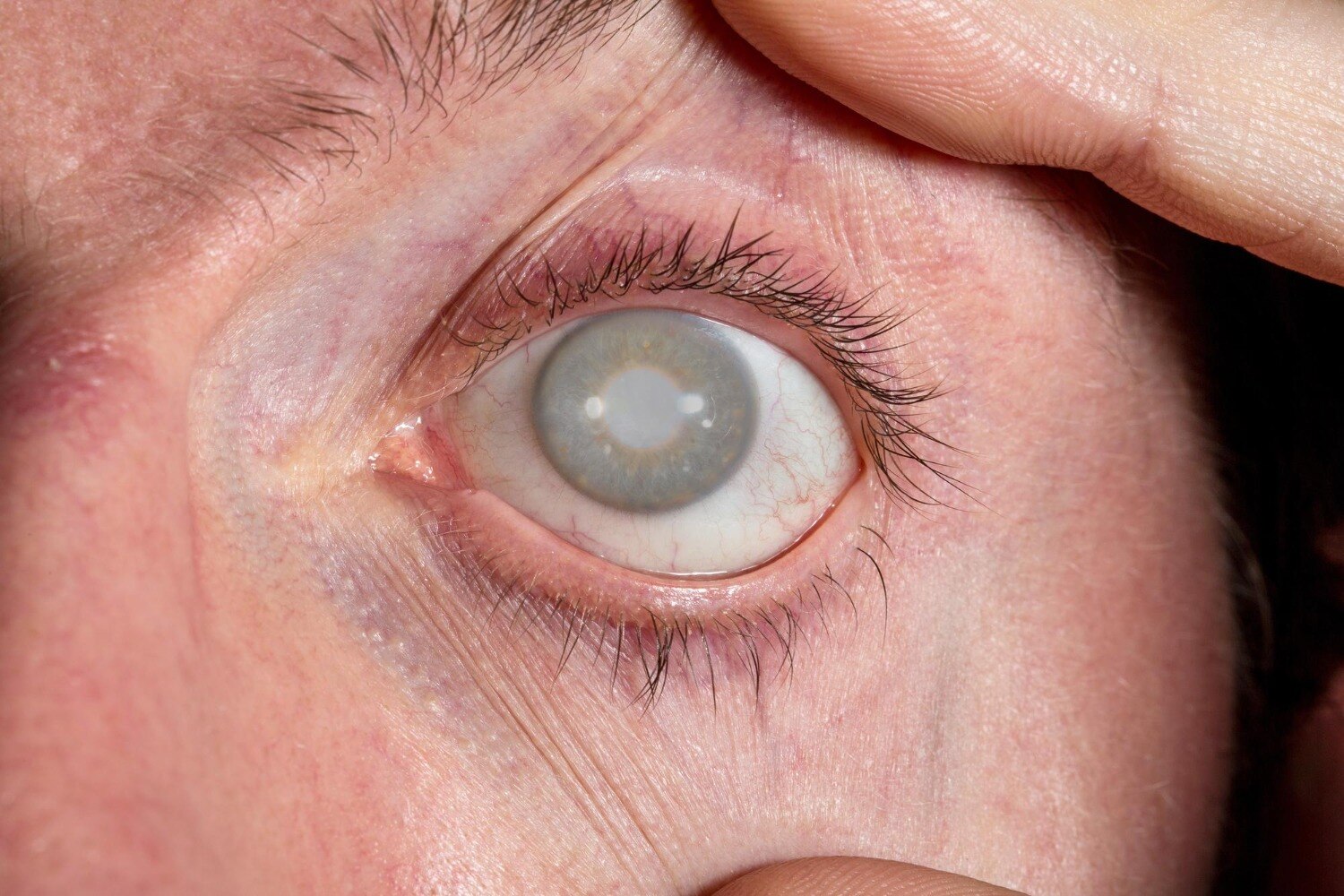
Cataract glare symptoms involve more than ordinary blur. Headlights can develop halos around headlights, while streetlights may produce starbursts around lights. Bright sunlight can feel uncomfortable, colours may look faded, and contrast can seem washed out, making difficulty driving at night during cataract symptoms especially noticeable.
Temporary blur after prolonged screen use, waking, or rubbing your eyes often clears with blinking and rest. Arrange an assessment when blur returns repeatedly, gradually worsens, affects one eye more than the other, or continues despite blinking. Cataracts can progress at different rates in each eye.
Daily warning signs include:
- Reading needs brighter light or larger print.
- Faces become harder to recognise across a room.
- Stairs and kerbs are harder to judge.
- Screen work causes persistent haziness or glare.
- Moving between bright sunlight and dim rooms takes longer to adjust.
You may still read a familiar eye-chart line while struggling with low contrast, glare, or night driving. The chart measures clarity under controlled conditions; it does not recreate headlights, stair edges, faces, or changing light.
Progressive symptoms that interfere with safety, work, mobility, or independent living justify arranging a cataract assessment, even without a dramatic fall in visual-acuity results. A painless, gradual change is typical; sudden loss, flashes, a curtain-like shadow, or a painful red eye needs urgent care instead.
How can you tell cataract glare from dry eye, astigmatism, or another eye problem?
Glare alone cannot prove that a cataract needs surgery. Cataract or dry eye glare can look similar, but dry eye tends to fluctuate and may clear briefly after blinking or using lubricating drops. An outdated prescription or uncorrected astigmatism halos can cause ghosting, streaks, and blur that improve with the correct glasses.
Other clues matter:
- Corneal disease and glare: an irregular corneal surface can distort lights into streaks, halos, or smeared shapes.
- Medication effects: some medicines alter focusing or increase light sensitivity.
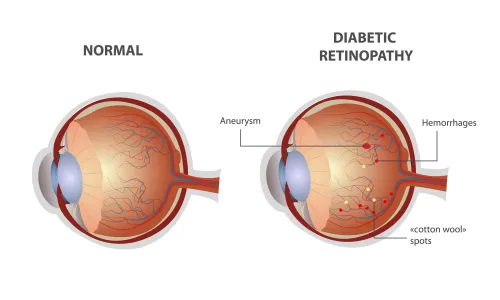
- Diabetic eye disease blurred vision: diabetic retinopathy can reduce sharpness and contrast.
- Glaucoma, macular disease, retinal disease, or optic-nerve problems: each can reduce contrast or blur vision, even when the lens is not the main cause.
A dilated retinal examination helps identify what the cloudy lens cannot explain. Removing a cataract will not restore sight lost mainly from retinal or optic-nerve disease, although cataracts and these conditions can exist together.
If your current prescription still gives useful vision, updated glasses, brighter task lighting, magnification, and reduced glare can make reading or screen work easier. They manage function; they do not dissolve or reverse a cataract. Only surgery removes the cloudy natural lens and replaces it with an intraocular lens.
When does blurred vision interfere enough to discuss cataract surgery?
Consult a cataract surgeon when vision starts limiting what you do, not when you reach a particular eye-chart result. There is no universal cataract surgery visual acuity threshold: someone may read a familiar line yet struggle with contrast, glare, or safe mobility.
The decision depends on cataract symptoms affecting daily activities and whether a current glasses prescription still restores useful function.
Ask yourself whether you:
- Avoid night driving and headlights because halos or starbursts make the road unsafe.
- Increase screen magnification or lose your place while reading.
- Need unusually bright light for print.
- Misjudge kerbs, steps, or stairs.
- Struggle to recognise faces or manage independent activities.
Compare your vision with updated glasses against the remaining problems. If glasses no longer provide adequate function and the blur or glare is progressively worsening, discussing surgery is reasonable. This is the practical link between night driving and cataracts, rather than a test score alone.
| Finding | What it suggests | Reasonable next step |
|---|---|---|
| Glasses restore useful vision | Early symptoms remain manageable | Update glasses, lighting, or magnification |
| Glare and contrast problems persist | The cloudy lens still affects function | Arrange a cataract consultation |
| Retina, optic nerve, cornea, or other disease is present | Surgery may not restore all lost vision | Review expected benefit carefully |
Cataract surgery definitively removes the cloudy lens, but final vision depends on the rest of the eye. An assessment does not commit you to immediate surgery; the surgeon can recommend monitoring, updated glasses, or treatment based on your daily needs.
Which vision changes require urgent eye care instead of a routine cataract appointment?
Slowly worsening, painless blur and glare fit a routine cataract assessment; sudden changes do not. Sudden vision loss requires urgent eye care, especially when it affects one eye. Do not wait for a routine cataract appointment if any of these signs appear:
| Symptom | Main concern | Action |
|---|---|---|
| Sudden vision loss, a curtain over vision, or a dark shadow | Retinal tear or detachment | Contact urgent eye services or emergency care immediately |
| A sudden shower or increase of floaters, with flashes of light | Flashes and floaters can signal retinal detachment | Seek urgent eye assessment |
| Painful red eye with blurred vision, halos, severe headache, nausea, or vomiting | Acute angle-closure glaucoma | Get immediate medical attention |
| Sudden double vision | Eye, nerve, or brain-related problem | Arrange prompt emergency evaluation |
New pain, marked redness, rapidly worsening vision, or increasing light sensitivity after cataract surgery is not routine recovery. Report it promptly rather than waiting for a scheduled review.
Also report sudden flashes or floaters after surgery. Contact urgent eye services or an emergency department promptly, particularly when symptoms begin suddenly, worsen quickly, or affect one eye. A cataract develops gradually; it does not explain away a dangerous new symptom.
What happens at a cataract consultation, and what should you record first?
Record the pattern of your glare before the appointment: when it began, whether headlights, sunlight, screens, or indoor lights trigger it, whether one eye is worse, and which activities have changed. Describe driving limits caused by the symptoms themselves, not only by an eye-chart score.
What to bring to a cataract surgeon includes:
- Your current glasses and details of recent prescription changes
- A complete medicine list, including steroids, blood thinners, and anticoagulants
- Information about diabetes, previous eye injury, prior eye surgery, and diagnosed eye conditions
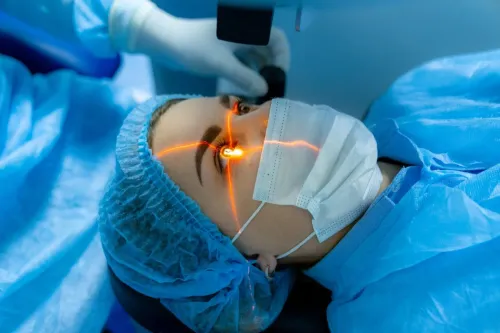
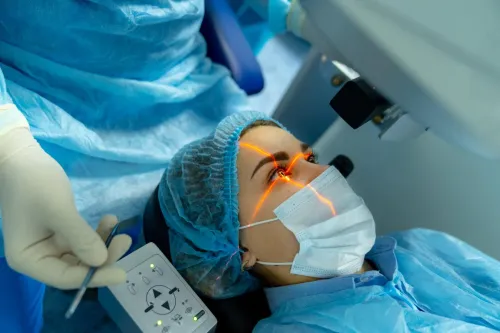
What happens during a cataract consultation is a sequence of measurements and examinations:
| Test | What it checks | Why it matters |
|---|---|---|
| Visual-acuity testing and refraction | Clarity with and without lenses | Shows whether updated glasses still help |
| Slit-lamp examination and dilated eye exam | The cornea, lens, retina, and optic nerve | Identifies cataract and other causes of glare |
| Intraocular-pressure measurement | Pressure inside each eye | Helps assess glaucoma risk |
| Optical biometry for cataract surgery or ultrasound | Eye length and related measurements | Helps calculate intraocular-lens power |
Ask which finding explains the glare, whether the retina and optic nerve are healthy, which lens options fit your needs, and what follow-up and recovery involve.
Dr. Jyoti's Hospital in Zirakpur can provide a setting to discuss these findings with an ophthalmology team; the useful outcome is a decision matched to your symptoms, eye health, and daily activities.
Related services
Eye Care Cataract Treatment in Zirakpur Dr Jyoti Hospital offers advanced cataract treatment in Zirakpur with expert consultation and modern diagnostic support. View service → |
Eye Care / Ophthalmology Eye Checkup in Zirakpur Get a comprehensive eye checkup in Zirakpur at Dr Jyoti Hospital with experienced eye specialists. View service → |
Frequently asked questions
What do cataract-related glare and progressive blur look like in daily life?
You may notice halos around headlights, starbursts around streetlights, faded colours, washed-out contrast, and gradually worsening blur.
How can you tell cataract glare from dry eye, astigmatism, or another eye problem?
Cataracts usually cause gradual blur, glare, faded colours, and reduced contrast. Dry eye often fluctuates and improves after blinking, while astigmatism can cause persistent blur or ghosting at all distances. An eye examination is needed to identify the cause.
When does blurred vision interfere enough to discuss cataract surgery?
Discuss surgery when vision affects driving, reading, work, recognising faces, using screens, or other daily activities despite updated glasses.
Which vision changes require urgent eye care instead of a routine cataract appointment?
Seek urgent care for sudden vision loss, severe eye pain, a red eye with nausea, new flashes, a sudden shower of floaters, or a curtain-like shadow.
What happens at a cataract consultation, and what should you record first?
The clinician reviews your symptoms and medical history, checks visual acuity and eye health, measures the eye for an artificial lens, and discusses treatment options. Record symptom onset, triggers, affected tasks, glasses use, medications, and previous eye conditions.