
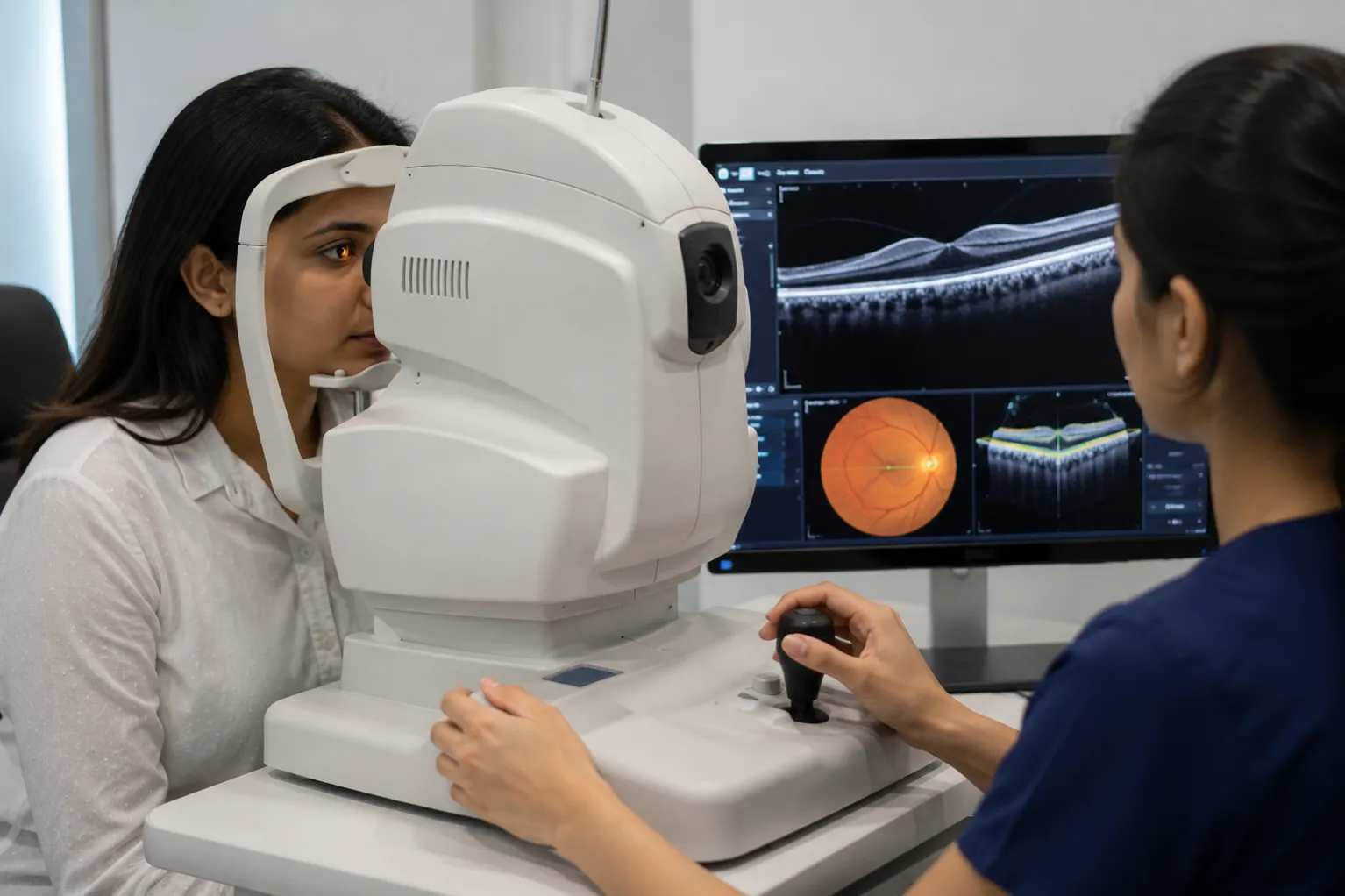
Many eye conditions begin long before noticeable vision loss occurs. That is why ophthalmologists rely on advanced diagnostic tools to detect problems early. An OCT scan for retina is one of the most valuable imaging tests used in modern eye care. It provides highly detailed cross-sectional images of the retina, helping doctors diagnose and monitor several eye diseases with remarkable accuracy.
Unlike an ordinary eye examination, an OCT scan allows specialists to examine the individual layers of the retina without any surgical procedure. For people in Chandigarh experiencing blurred vision or living with diabetes, this test can play an important role in identifying retinal changes before they become severe.
Looking Inside the Retina Without Surgery
Optical Coherence Tomography, commonly known as OCT, is a non-invasive imaging test that uses light waves to create detailed images of the retina. The procedure is painless, quick, and does not involve injections or contact with the eye in most cases.
The scan helps doctors examine:
- Retinal thickness
- Swelling within the retina
- Damage to retinal layers
- Fluid accumulation
- Macular health
- Optic nerve structure in selected cases
These detailed images provide valuable information that cannot be seen during a routine eye examination alone.
When Does Your Doctor Recommend an OCT Scan?
An OCT scan is not only performed after vision problems develop. It is often recommended to confirm a diagnosis, monitor ongoing treatment, or detect early retinal changes.
Your ophthalmologist may advise this test if you have:
- Blurred or distorted vision
- Diabetes
- Age-related macular degeneration
- Suspected retinal swelling
- Glaucoma
- Retinal vein disorders
- Unexplained changes in vision
Early diagnosis allows treatment to begin before irreversible damage affects eyesight.
What Happens During the Test?
One of the biggest advantages of an OCT scan is that it is simple and comfortable for patients.
During the examination:
- You will sit in front of the OCT machine.
- Your chin will rest on a support.
- You will be asked to focus on a target.
- The machine captures detailed retinal images within seconds.
- Your doctor reviews the results immediately.
The procedure is painless and usually takes only a few minutes. In some situations, dilating eye drops may be used to obtain clearer images.
How OCT Helps Doctors Make Better Decisions
The detailed images produced by OCT enable ophthalmologists to detect even small retinal changes that may not yet affect vision.
The scan helps specialists:
- Diagnose retinal diseases accurately
- Monitor disease progression
- Evaluate treatment response
- Plan surgery when required
- Compare retinal health over multiple visits
Because the images can be stored digitally, doctors can easily track changes over time and adjust treatment accordingly.
Why People with Diabetes Should Not Delay This Test
Diabetes can damage the tiny blood vessels inside the retina without causing early symptoms. By the time vision becomes blurred, significant retinal damage may already be present.
Regular OCT scans can help identify:
- Diabetic macular edema
- Retinal swelling
- Early diabetic retinal damage
- Changes requiring medical treatment
Routine monitoring is especially important for diabetic patients, even if their eyesight appears normal.
An Important Step Towards Better Eye Care
Advanced diagnostic tests have transformed the way retinal diseases are detected and managed. An OCT scan provides valuable information that supports accurate diagnosis, timely treatment, and better long-term monitoring of eye health.
For individuals looking for an OCT scan for retina in Chandigarh, Dr. Jyotis Hospital offers comprehensive retinal evaluation supported by modern imaging technology and experienced ophthalmologists. Patients can also visit drjyotihospital.org to understand how advanced retinal diagnostics contribute to preserving healthy vision.
Keywords