Cloudy or blurred vision months or years after cataract surgery does not automatically mean that the original cataract has returned. By the end, you will know how posterior capsule opacification is identified, when its symptoms justify YAG laser capsulotomy, what the appointment involves, and which warning signs require prompt review.
Key takeaways
- PCO causes cloudy vision when cells haze the capsule behind the implant.
- YAG capsulotomy is considered when capsule haze affects useful vision.
- The outpatient laser procedure usually requires an eye examination and dilating drops.
- Seek urgent care for severe pain, sudden vision loss, or many new floaters.
Why vision can become cloudy again after cataract surgery
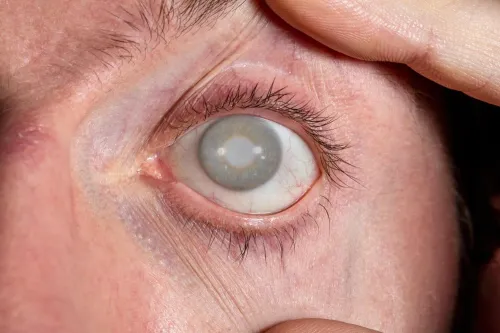
Months or years after cataract surgery, cloudy vision after cataract surgery is most often caused by posterior capsule opacification (PCO). Residual lens epithelial cells can multiply and form haze on the thin membrane behind the implanted intraocular lens. Light then scatters, producing blur, glare, reduced contrast, or halos.
PCO is not the original cataract growing back. Cataract surgery removes the cloudy natural lens; the implanted lens usually remains clear. A new cataract after surgery cannot develop in that removed natural lens, although the other eye can later develop its own cataract.
Rarely, the implanted lens itself becomes damaged, displaced, or cloudy, which is a different problem from PCO.
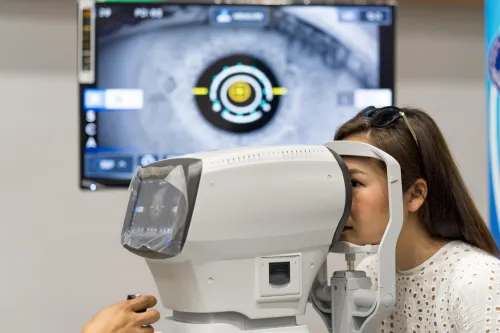
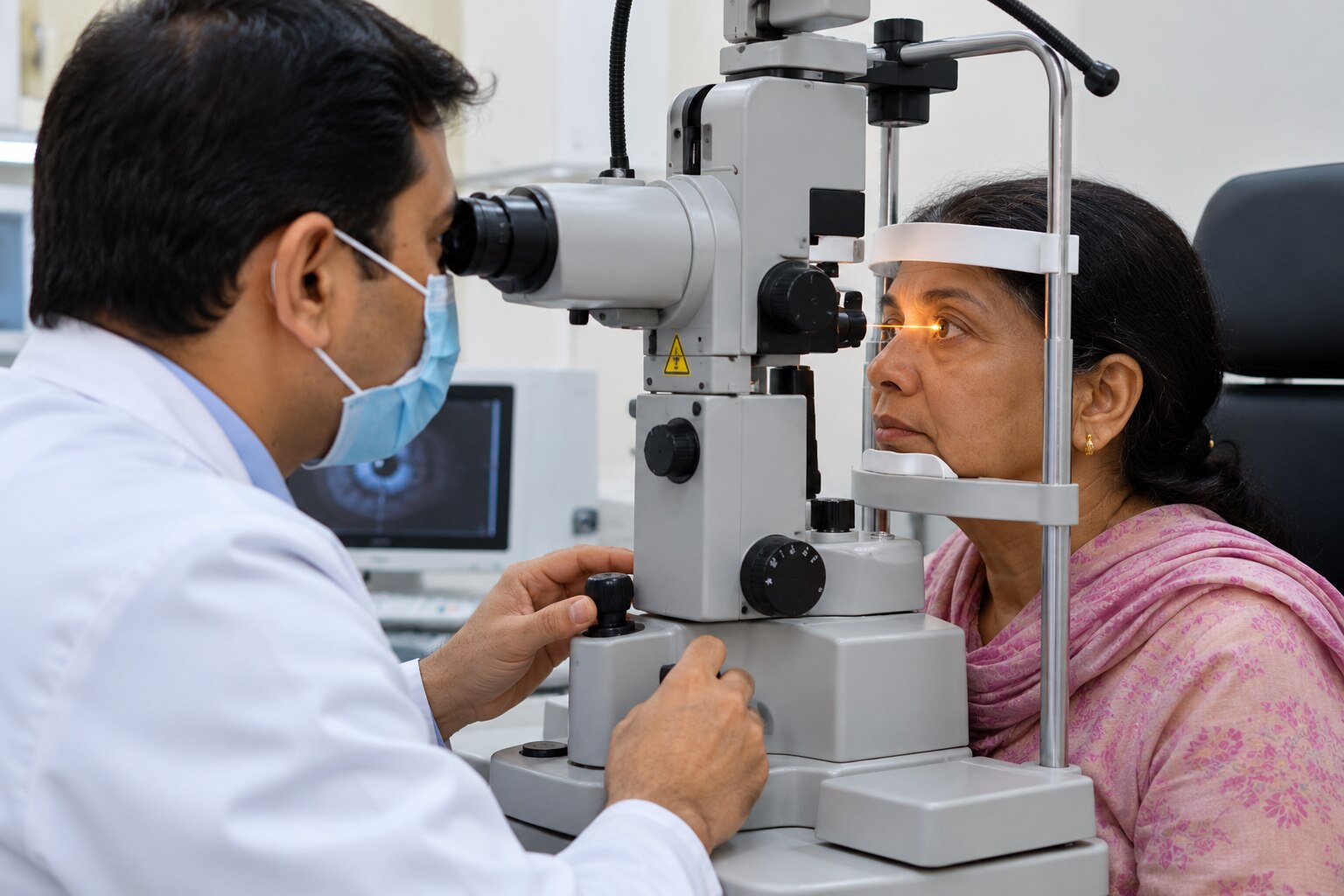
Cloudy vision does not prove that PCO is responsible. An ophthalmologist examines the eye with a slit lamp and checks for other explanations, including:
- Dry eye or an uncorrected glasses prescription
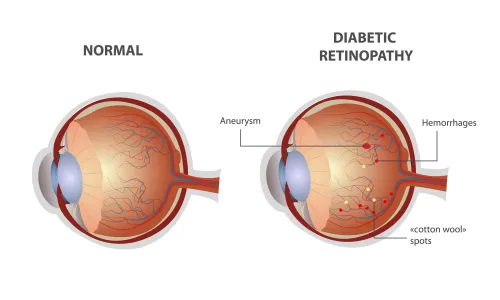
- Swelling at the macula, the central retina
- Retinal or optic-nerve disease
- Corneal problems or an intraocular-lens complication
The timing and pattern of symptoms matter. Blur that returns after a period of clear vision points toward PCO, but an examination must show that the capsule opacity matches the visual complaint before laser treatment is considered.
When an ophthalmologist may recommend YAG capsulotomy
Persistent blurred vision is a reason to consider YAG only when posterior capsule opacification (PCO) is central and matches what you report. Glare and halos, difficulty reading, or reduced contrast after cataract surgery add weight to treatment when the intraocular lens and other eye structures appear sound.
The key question in deciding when YAG laser is recommended is whether PCO explains the vision problem. A slit-lamp examination shows the capsule haze, while visual-acuity testing, refraction, and assessment of the cornea, retina, macula, optic nerve, and intraocular lens look for another cause.
| Finding | What it suggests | Why it matters |
|---|---|---|
| Central capsule haze with reduced visual acuity | PCO is in the visual axis | YAG is more likely to improve measurable blur |
| Capsule haze with glare, halos, or reduced contrast | Scattered light from PCO | Treatment may help troublesome visual symptoms |
| Visible PCO but clear vision and minimal symptoms | Incidental opacity | Laser exposes the eye to risk without a clear benefit |
| Blur with dry eye, refractive error, macular edema, retinal disease, or lens damage | Another cause or a mixed problem | Treat or investigate that cause before YAG |
There is no mandatory waiting period of several months. The ophthalmologist considers symptom impact, inflammation, retinal health, lens stability, and whether an intraocular-lens procedure could be needed instead.
At Dr. Jyoti's Hospital, an eye consultation can help separate capsule haze from dry eye, refractive error, retinal disease, or an intraocular-lens problem before treatment is chosen.
What the YAG laser appointment involves
A YAG laser capsulotomy is an outpatient appointment, usually without an incision, stitches, or removal of the implanted lens. The clinician first confirms that posterior capsule opacification explains your symptoms and checks the eye before treatment.
1. Before treatment, your vision and eye pressure are measured. The clinician examines the capsule with a slit lamp, explains the planned opening, and instils pupil dilation and topical anaesthetic drops. Dilation can make bright light uncomfortable and blur near vision for several hours.
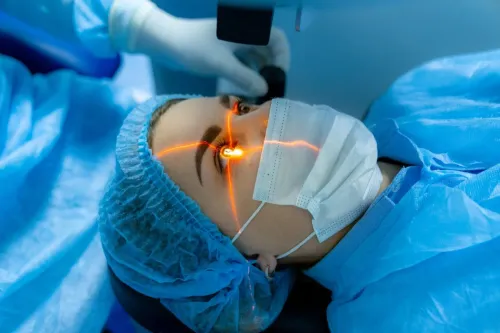
2. During the YAG laser capsulotomy procedure, you sit with your chin and forehead supported at a laser microscope. You look at a target while the laser makes a clear opening in the cloudy capsule behind the lens. You may see brief bright flashes or hear clicking sounds.
A contact lens placed on the eye helps focus the laser; you may feel light pressure, but sharp pain is not expected.
3. Immediately afterward, the clinician checks your eye pressure and may prescribe anti-inflammatory drops. Vision can remain hazy from the drops, and short-term floaters may appear as capsule fragments become visible. Arrange transport if your vision is too blurred to drive safely, and wear sunglasses if light feels harsh.
Recovery, follow-up, and symptoms that need urgent attention
Vision may be hazy immediately after YAG treatment, and short-term floaters after YAG laser are common as capsule fragments and existing vitreous opacities become more noticeable. Mild irritation or light sensitivity can occur, while vision often settles as the eye recovers.
Your clinician may prescribe anti-inflammatory eye drops. Use them exactly as directed, and attend the scheduled eye pressure check because pressure can rise temporarily, especially if you have glaucoma or other pressure-related risk.
Keep the follow-up appointment even if vision improves. The examination checks pressure, inflammation, the cornea, the intraocular lens, the macula, and the retina.
| Symptom | Usually expected during recovery | Needs rapid eye assessment |
|---|---|---|
| Floaters | A few new specks or strands that gradually become less intrusive | A sudden shower of floaters, especially with flashes |
| Vision | Temporary blur that improves after the drops wear off or inflammation settles | A curtain, veil, shadow, or sudden loss of vision |
| Discomfort | Mild grittiness, watering, or light sensitivity | Increasing pain, marked redness, severe light sensitivity, or worsening vision |
These warning signs include retinal tear symptoms and can indicate a retinal tear or detachment. Seek urgent assessment the same day, particularly if you have high myopia, lattice degeneration, a previous retinal tear or detachment, complicated cataract surgery, or other peripheral-retinal disease.
Rapid review is also needed for persistent worsening blur, because raised eye pressure, cystoid macular edema, corneal swelling, inflammation, bleeding, or intraocular-lens damage can require treatment.
What YAG laser can and cannot improve
A clear central posterior capsule opacity is the situation in which YAG is most likely to improve vision substantially. It works by creating an opening in the cloudy capsule, not by replacing the implanted lens or repairing damaged eye tissue.
YAG cannot restore vision lost from:
- Macular disease
- Glaucoma
- Optic-nerve damage
- Amblyopia
The link between macular disease and YAG matters: a visible opacity does not prove that PCO causes the blur. Dry eye, incorrect glasses power, macular swelling, corneal disease, retinal problems, or an incorrectly positioned or damaged intraocular lens may require different treatment. These are central YAG laser limitations.
If the lens itself is the problem, an intraocular lens exchange may be more appropriate, so the capsule may be left unopened until that decision is clear.
There is no universal waiting period after cataract surgery. The ophthalmologist individualizes timing based on symptom impact, eye inflammation, retinal status, intraocular-lens stability, and whether lens exchange remains possible.
The opening size and laser energy are also tailored: a larger opening may improve the visual axis but raises YAG laser risks, including inflammation, pressure elevation, lens damage, and vitreous or retinal complications. More treatment is not automatically better.
Frequently asked questions
Why can vision become cloudy months or years after cataract surgery?
Posterior capsule opacification occurs when residual lens epithelial cells form haze on the membrane behind the implanted intraocular lens. The haze scatters light and can cause blur, glare, reduced contrast, or halos.
When may an ophthalmologist recommend YAG capsulotomy?
An ophthalmologist may recommend it when posterior capsule opacification is confirmed and the resulting blur, glare, or contrast loss interferes with useful vision. The examination also checks for other causes of cloudy vision.
What happens during a YAG laser appointment?
The ophthalmologist examines the eye, uses dilating drops, applies anaesthetic eye drops if needed, and directs short YAG laser pulses at the cloudy capsule to create a clear opening. It is performed as an outpatient procedure.
What symptoms need urgent attention after YAG capsulotomy?
Contact an eye-care professional urgently for sudden vision loss, severe eye pain, marked redness, a curtain-like shadow, or a sudden increase in flashes or floaters.
What can and cannot YAG laser improve?
YAG capsulotomy can improve vision reduced by posterior capsule opacification. It cannot correct every cause of blurred vision, including retinal disease, glaucoma, corneal problems, or an incorrect glasses prescription.