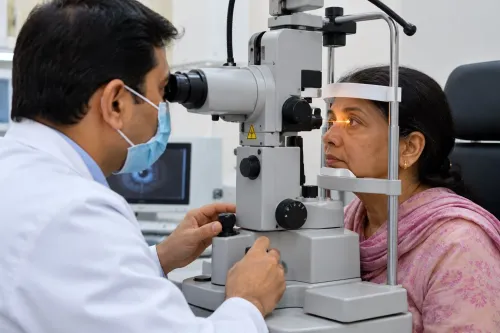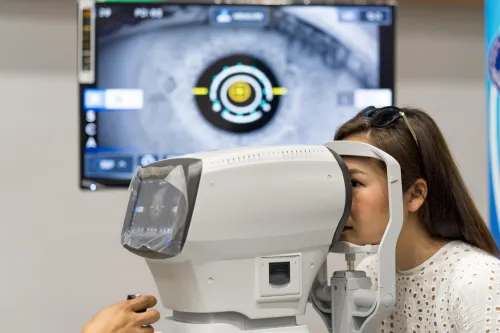

The right eye hospital depends on the problem being investigated, the tests required, and what happens after the diagnosis. By comparing departments, equipment, urgent-care access, surgical safeguards and follow-up arrangements, you can choose a service suited to your condition rather than relying on a general reputation or an equipment list.
Key takeaways
- Choose a clinician experienced with your specific eye condition.
- Match required tests to cataract, retina, glaucoma or routine-care needs.
- Ask who handles retinal emergencies and how quickly patients are seen.
- Confirm glaucoma follow-up includes pressure checks, fields and optic-nerve monitoring.
Start with the Eye Problem, Not the Hospital’s Equipment List
Choose the clinician who treats the problem you have, not the hospital with the longest equipment list.
| Condition | Department or specialist to seek | Selection point |
|---|---|---|
| Cataract or blurred vision | Cataract surgeon | Ask who performs surgery and manages late haze from posterior capsule opacification, including YAG laser capsulotomy. |
| Flashes, floaters, curtain, diabetic retinopathy or macular disease | Retina specialist | New flashes, a sudden shower of floaters, or a curtain-like shadow needs same-day retina assessment. |
| Raised eye pressure or glaucoma risk | Glaucoma specialist | Choose a service offering ongoing monitoring, not a single pressure reading. |
| Routine adult eye care | Comprehensive ophthalmologist | The clinician should assess symptoms, refraction, the front of the eye and dilated retina findings. |
| Child with squint, reduced vision or abnormal red reflex | Pediatric ophthalmology pathway | Delayed treatment can cause amblyopia. |
People with diabetes need retinal examinations even when vision seems normal. Ask whether findings are documented and whether referral to a medical or surgical retina specialist is defined.
A suitable service explains why you need a particular follow-up interval based on age, symptoms, diabetes, family history and previous findings. Equipment-only screening is not enough: ask for a clinician’s examination, formal interpretation of images or visual fields, and documented follow-up.
Match the Required Tests to the Condition
A suitable eye hospital should match each visit to the suspected condition, not sell every patient the same test package. Ask whether an ophthalmologist examines you, interprets the results, records them, and explains the follow-up interval; routine review depends on age, symptoms, diabetes, glaucoma risk, medicines, and previous findings.
| Condition | Examinations and equipment to look for | What the service should provide |
|---|---|---|
| Routine eye care | Refraction, slit lamp examination, tonometry, and a dilated fundus examination when indicated | A documented assessment, not equipment-only screening |
| Cataract | Slit lamp examination, optical biometry, keratometry, and corneal measurements before surgery | Lens measurements and a surgeon’s review of the findings |
| Retina or diabetes | Dilated fundus examination, optical coherence tomography, and fundus photography | Documented retinal findings and referral to a medical or surgical retina specialist |
| Glaucoma | Tonometry, optic-nerve examination or fundus photography, visual-field testing, gonioscopy, central corneal-thickness measurement, and optical coherence tomography | Results interpreted together over time, rather than a decision based on eye pressure or one scan |
For new flashes, a sudden shower of floaters, or a curtain-like shadow, confirm that the hospital has same-day retina assessment. After surgery, ask who handles increasing pain, worsening vision, marked redness, or discharge after hours; waiting for a routine appointment can threaten sight.
Verify that the listed tests are performed on site or identify the named facility receiving referrals.
How to Compare Cataract Surgery Services
Ask how the surgeon calculates lens power, not which brand appears in the brochure. Optical biometry uses light and is preferred when the eye can be measured reliably; ultrasound biometry is useful when a dense cataract or other opacity blocks an accurate optical reading. Confirm that corneal measurements, eye length and other values are recorded.
| Biometry method | What it means | When it applies |
|---|---|---|
| Optical biometry | Non-contact light-based measurement | Reliable readings are possible |
| Ultrasound biometry | Sound-wave measurement through the eye | Dense cataract or opacity limits optical measurement |
Compare intraocular lens options with your daily needs: distance, reading, astigmatism correction and night-driving expectations. The consultation should also examine the macula, optic nerve, cornea and ocular surface; another condition can limit vision after a technically successful operation.
Ask these questions before booking:
- What anaesthesia will you use, who administers it, and what discomfort or movement should I expect?
- How do you sterilise instruments, prepare the operating eye and prevent infection?
- Who provides after-hours advice, and where are postoperative emergencies examined?
- How are increasing pain, worsening vision, redness, discharge or new floaters assessed?
Ask how the hospital handles complications and late blur. Posterior capsule opacification is not a new cataract and is commonly treated with YAG laser capsulotomy. Confirm the schedule for follow-up, the clinician reviewing results and the pathway for urgent or long-term care.
Choose a Retina Service That Can Handle Urgent and Ongoing Care
A capable retina service combines a dilated retinal examination with interpreted imaging, an urgent assessment pathway and documented follow-up. Equipment alone is not enough: ask whether a retina specialist reviews abnormal findings and whether treatment or referral is arranged without delay.
| Condition | What the service should provide | Warning sign |
|---|---|---|
| Diabetic retinopathy | Dilated examination, fundus photography and a written severity assessment, with referral to a medical or surgical retina specialist | Screening ends with a photograph and no documented plan |
| Retinal detachment | Same-day assessment for flashes, a sudden shower of floaters, or a curtain-like shadow; retinal examination and access to repair or urgent referral | The hospital offers only a routine appointment |
| Macular disease | Optical coherence tomography (OCT), retinal examination and a treatment plan for conditions such as macular degeneration or diabetic macular oedema | An injection is offered without scheduled monitoring |
| Vitreous haemorrhage | Dilated examination and B-scan ultrasound when blood blocks the retinal view, followed by a cause-specific plan | No pathway exists to exclude a tear or detachment |
Ask these questions before choosing:
- How quickly are sudden flashes, floaters or a visual curtain assessed?
- Who interprets OCT and photographs?
- How are missed injection or monitoring appointments followed up?
- Is retina surgery performed on site, or is there a named receiving centre?
Check Whether Glaucoma Care Includes Long-Term Monitoring
A single tonometry result cannot confirm or exclude glaucoma: pressure varies, and damage can progress at a “normal” reading. A complete assessment combines a clinician’s optic-nerve assessment, visual-field testing, gonioscopy, central corneal-thickness measurement and, when indicated, OCT structural imaging. These findings need joint interpretation, not an isolated scan or equipment-only screen.
Because glaucoma damage is generally irreversible, treatment aims to prevent further loss. Ask how the hospital will track change over time:
- Record baseline intraocular pressure, optic-nerve structure and visual-field performance before judging treatment success.
- Repeat the appropriate tests at an interval based on pressure, damage, risk factors, medication and previous results.
- Compare new visual fields and OCT scans with earlier records; a single stable-looking report does not prove stability.
- Confirm that a glaucoma specialist or suitably trained ophthalmologist reviews the results and documents medication changes, target pressure and the next review date.
- Ask why the recommended follow-up interval fits your risk instead of accepting a fixed annual package.
The service should provide formal interpretation, documented follow-up and access to the right specialist. Advanced equipment alone does not guarantee careful glaucoma care.
Verify On-Site Care, Emergency Access and Follow-Up
Confirm the hospital’s pathway before booking: ask whether the required examination or procedure happens on site, who performs it, and who handles a problem afterward. Equipment alone proves little without a clinician’s examination, formal report and documented follow-up.
1. Request a written list of on-site diagnostics for your case, such as optical coherence tomography, visual fields, retinal imaging or biometry. Ask whether the same visit includes specialist interpretation or an outside referral.
2. Ask what happens after new flashes, a sudden shower of floaters, or a curtain-like shadow. The answer should identify who provides an urgent eye examination and whether suspected retinal tears or detachment are assessed the same day.
3. Before surgery, get the postoperative follow-up schedule and an after-hours contact. Increasing pain, worsening vision, severe redness, discharge or new floaters need a rapid assessment, not just the next routine appointment.
4. Ask how late problems are handled. Hazy vision months or years after cataract surgery can result from posterior capsule opacification, which is treated with a YAG laser capsulotomy.
5. Ask why your routine review interval is recommended, especially with diabetes or glaucoma risk. When assessing Dr. Jyoti's Hospital, use these questions to distinguish a complete care pathway from equipment-only screening.
Related services
Eye Care Cataract Treatment in Zirakpur Dr Jyoti Hospital offers advanced cataract treatment in Zirakpur with expert consultation and modern diagnostic support. View service → |
Eye Care / Ophthalmology Eye Checkup in Zirakpur Get a comprehensive eye checkup in Zirakpur at Dr Jyoti Hospital with experienced eye specialists. View service → |
Frequently asked questions
How should I choose an eye hospital for my condition?
Start with the eye problem and choose a service with clinicians who routinely diagnose and treat that condition, rather than comparing equipment lists alone.
What tests should an eye hospital provide?
The tests depend on the condition. Cataract assessments examine vision and the lens; retina care may require dilated retinal examination, optical coherence tomography or retinal imaging; glaucoma assessment includes eye-pressure measurement, visual fields and optic-nerve evaluation.
How can I compare cataract surgery services?
Ask who performs the surgery, which pre-operative measurements are taken, what intraocular lens options are offered, how complications are handled and what follow-up schedule is provided.
What should I check in a retina service?
Check whether the service can assess urgent symptoms quickly, perform retinal imaging and provide ongoing treatment and monitoring for conditions such as retinal tears, diabetic retinopathy and macular disease.
What does good long-term glaucoma care include?
It includes repeated eye-pressure checks, visual-field testing, optic-nerve assessment, treatment adjustments and documented follow-up over time.