A quick spectacle-power check cannot reveal every problem affecting your eyes. Choose a clinician by verifying qualifications, matching their expertise to your history, confirming the examination includes eye-health checks, and knowing when routine care is not safe to delay.
Key takeaways
- Choose an ophthalmologist when you need diagnosis, treatment, surgery, or specialist referral.
- Confirm the exam checks eye health, not only visual acuity and glasses power.
- Match follow-up intervals to your age, symptoms, diabetes, and eye-health history.
- Book urgent assessment instead of routine testing for sudden vision loss or severe eye pain.
Choose the Right Eye-Care Professional for the Job
Check ophthalmologist qualifications before booking: an ophthalmologist is a medical doctor, commonly trained through MBBS followed by MS Ophthalmology (MBBS MS Ophthalmology) or DNB Ophthalmology. This clinician can diagnose eye disease, prescribe treatment, manage surgery, and arrange specialist referrals.
| Professional | What they can handle | Choose them when |
|---|---|---|
| Ophthalmologist | Medical and surgical eye care, disease diagnosis, treatment, and referrals | You have symptoms, disease risk, abnormal findings, or possible surgery |
| Optometrist | Refraction, routine vision assessment, contact-lens care, and many non-surgical concerns | You need basic vision care, subject to local licensing rules |
| Optical-store refractionist | Spectacle measurements and product guidance | You only need help selecting or measuring glasses, not an eye-health assessment |
The optometrist versus ophthalmologist choice depends on the problem.
Seek a retina specialist for diabetes, flashes, floaters, or other retinal symptoms; a cornea specialist for corneal disease or complex contact-lens problems; a glaucoma specialist for glaucoma risk or abnormal eye pressure; and a pediatric eye specialist for a child with misalignment, developmental concerns, or an abnormal screening result.
Before booking, ask who will perform the examination, their exact qualification, and whether the clinic has a referral pathway when the problem exceeds routine care. A quick refraction is not a substitute for medical eye evaluation.
Confirm That the Appointment Checks Eye Health, Not Just Glasses Power
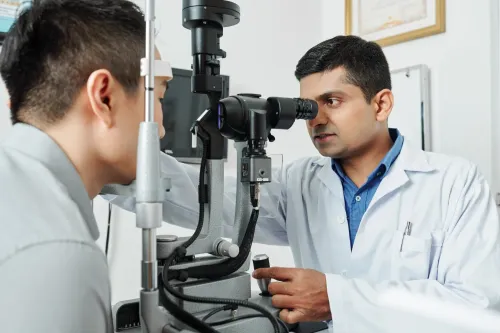
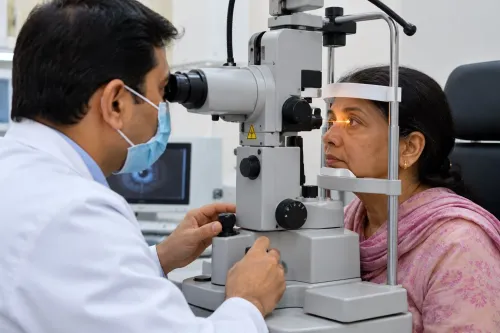
A competent examination includes routine eye examination tests, not just a glasses prescription. The doctor should take a medical history covering diabetes, medicines, family history, previous injury or surgery, and contact-lens use, then check distance and near visual acuity, refraction, pupil responses, and eye movements. A slit-lamp examination inspects the cornea, conjunctiva, iris, and lens.
Ask how eye pressure is measured:
| Method | How it works | What to know |
|---|---|---|
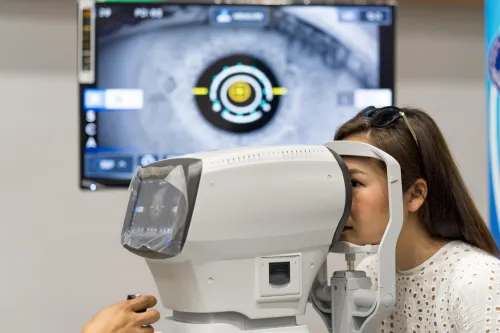
| Non-contact tonometry | Sends an air puff against the cornea | Useful for screening, but readings can vary with corneal properties and technique |
| Applanation tonometry | Gently contacts the cornea after numbing drops | Provides a more controlled reading when clinical confirmation is needed |
Pressure is only one part of glaucoma assessment. A normal reading does not rule out glaucoma, so ask whether the doctor examines the optic nerve and retina and performs visual-field testing when glaucoma or neurological disease is suspected.
Dilation should be considered when your age, symptoms, diabetes, high myopia, medication use, or other risks make a detailed retinal and optic-nerve view important. Retinal photography can support the assessment, but a photograph or chart reading is not a complete examination.
Ask what was examined, what was found, and why any follow-up or additional testing is recommended.
Match the Doctor and Follow-Up Schedule to Your History
Your age, health history, medicines, and habits should determine both the clinician you choose and your eye examination frequency. A single schedule for every patient can miss disease that has not yet affected visual sharpness.
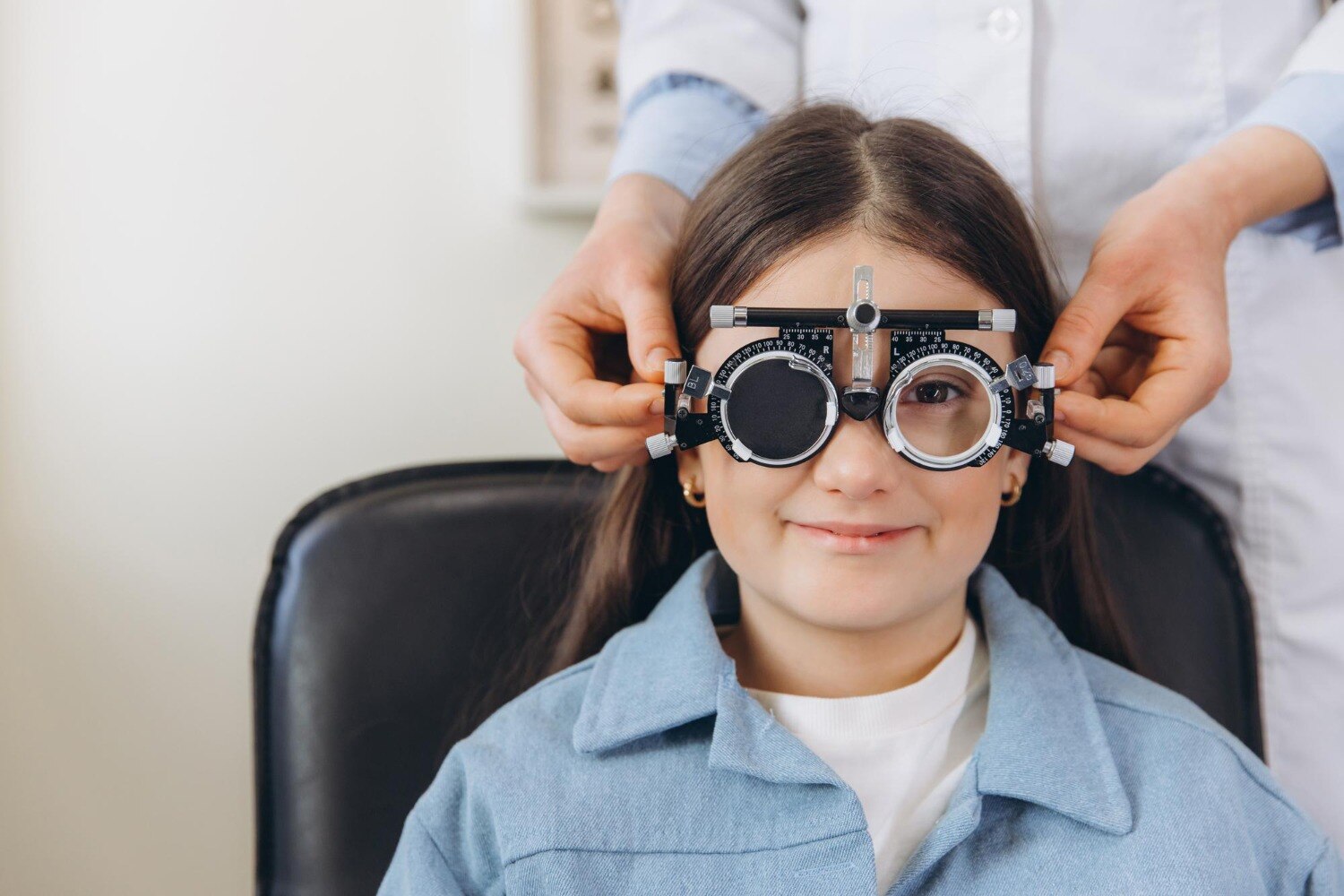
Plan a children eye checkup using age-appropriate screening, not only an eye chart. The assessment should look for amblyopia, unequal prescriptions, and eye misalignment. Arrange prompt review with a pediatric eye specialist after an abnormal screening result, or if a child squints, closes one eye, or struggles at school.
Adults without risk factors commonly need review every one to two years. After age 40, establish a regular schedule because near-vision changes and glaucoma risk increase with age.
Choose a clinician who provides the relevant follow-up for these situations:
- Contact-lens wearers: book at least an annual contact-lens examination covering lens fit, corneal health, hygiene, replacement habits, and sleeping or swimming in lenses.
- Diabetes: arrange a dilated diabetes eye examination at least yearly, unless your eye doctor sets a shorter interval. Pregnancy or previous retinopathy can change the plan.
- Higher-risk history: request individualized follow-up for hypertension, thyroid disease, steroid exposure, previous eye surgery, high myopia, a family history of glaucoma, or medicines that affect the eyes.
- Symptoms or abnormal findings: ask whether an ophthalmologist or a retina, glaucoma, cornea, or pediatric specialist should manage your care rather than relying on routine refraction alone.
A doctor who explains why your interval is shorter, unchanged, or extended is giving you a safer plan than one applying the same interval to everyone.
Know When a Routine Vision Test Is the Wrong Appointment
Sudden vision loss is an urgent problem, not a standard vision-test booking. A sudden increase in flashes and floaters or a curtain-like shadow can signal retinal detachment. Severe eye pain with halos and nausea can indicate acute angle-closure glaucoma; a red painful eye may reflect infection or inflammation.
| Symptom | Action | Possible concern |
|---|---|---|
| Sudden vision loss | Seek an ophthalmologist or emergency eye-care service immediately; do not drive | Retinal or other time-sensitive disease |
| Sudden increase in flashes and floaters | Obtain same-day retinal assessment | Retinal tear or detachment |
| Curtain over vision | Go to urgent eye care now | Retinal detachment |
| Severe eye pain, especially with halos and nausea | Seek emergency assessment immediately | Acute angle-closure glaucoma |
| Chemical splash | Rinse with clean running water for at least 20 minutes while arranging urgent care; do not rub | Chemical damage |
| Red painful eye | Arrange urgent assessment, especially with light sensitivity or reduced vision | Infection, inflammation, or corneal injury |
Do not drive yourself when vision is impaired. Ask any routine-care clinic whether it accepts same-day emergencies, where it sends patients outside opening hours, and how quickly it arranges referral to an ophthalmologist or retina, cornea, glaucoma, or pediatric specialist. Confirm that examination findings and images travel with the referral.
Ask These Questions Before You Book the Appointment
Before booking, use these questions to test whether the clinic fits your needs, rather than choosing it for a machine list or a promise of perfect vision.
1. Is dilation available, and is a dilated eye examination appropriate for my age, symptoms, medicines, diabetes, or other risks? Ask how long near vision may stay blurred and light sensitivity may last; the effect often lasts four to six hours, so confirm whether you need a driver.
2. Will the doctor examine my retina and optic nerve, or only take a retinal photograph? Ask whether findings are explained in plain language.
3. Is an eye pressure test included? Ask whether the clinic uses non-contact air-puff tonometry or applanation tonometry with numbing drops, and why that method suits you.
4. Is visual-field testing available when glaucoma or neurological disease is suspected? A normal pressure reading alone does not exclude glaucoma.
5. Does the clinic assess contact lenses, including fit, corneal health, hygiene, replacement, and sleeping or swimming in lenses?
6. How will I receive my prescription, examination findings, images, and follow-up plan? A useful doctor explains what was found, what the examination cannot exclude, and when to return without pressuring you to buy glasses or lenses.
7. What is the consultation fee, how long should I allow, and how are referrals or surgery opinions arranged? Ask how urgently results and images are transferred for an eye-care referral.
For someone in Zirakpur, Dr. Jyoti's Hospital is worth considering if its ophthalmology team answers these questions clearly and provides suitable records and referral support. Quality of care matters more than equipment count.
Frequently asked questions
What is the difference between an ophthalmologist and other eye-care professionals?
An ophthalmologist is a medical doctor trained to diagnose eye disease, prescribe treatment, perform surgery, and arrange specialist referrals. Check whether the professional's training matches the care you need.
How can I confirm that an eye appointment checks eye health?
Ask whether the appointment includes more than a glasses-power test. Confirm that the doctor will assess eye structures, screen for disease, review symptoms and history, and explain any required follow-up.
How often should I schedule routine eye testing?
Your follow-up schedule depends on your age, symptoms, diabetes, previous eye disease, surgery, family history, and treatment. Ask the doctor to give you a specific review interval.
When is a routine vision test the wrong appointment?
Choose urgent medical assessment for sudden vision loss, severe eye pain, a painful red eye, flashes with new floaters, a curtain-like shadow, an eye injury, or sudden double vision.
What should I ask before booking an eye-testing appointment?
Ask who will examine you, the professional's qualifications, whether the visit includes an eye-health assessment, which tests are included, how results are explained, and when follow-up is needed.