A few long-standing floaters are different from a sudden shower of spots, repeated flashes, a curtain-like shadow, or missing vision. By the end, you will know which symptoms require same-day emergency assessment, what to do before help arrives, and what a retina examination needs to check.
Key takeaways
- Seek same-day care for a curtain, shadow, vision loss, or sudden floaters.
- A sudden shower of floaters with repeated flashes can signal a retinal tear.
- Migraine aura usually affects both eyes and develops over several minutes.
- Avoid driving and arrange urgent retina review after sudden vision changes.
Which flashes, floaters and vision changes require same-day care?
A sudden shower of new floaters or repeated flashes is a flashes and floaters emergency. These are retinal detachment symptoms when they occur with a dark curtain or shadow, a missing section of peripheral vision, sudden vision loss in one eye, or a major drop in sharpness.
Seek same-day emergency eye assessment, especially for a curtain over vision, field loss, or sudden major vision loss.
| Symptom pattern | What it may indicate | What to do |
|---|---|---|
| A few floaters unchanged for months or years | Stable vitreous changes | Arrange a routine eye examination |
| Sudden many floaters or repeated flashes | Retinal tear, vitreous haemorrhage, or detachment | Obtain same-day emergency eye assessment |
| Curtain, shadow, or missing peripheral field | Possible retinal detachment | Go for emergency assessment immediately |
| New central blur, wavy straight lines, or a blind spot | Macular disease or retinal vascular disease | Seek prompt ophthalmic evaluation |
| Sudden loss of vision in one eye | Retinal vascular blockage or another eye emergency | Seek same-day emergency care |
A retinal detachment is usually painless, so no pain does not make these warning signs safe to ignore. Do not wait for symptoms to settle or book a routine slot when vision is changing rapidly.
If vision loss occurs with facial droop, weakness, speech difficulty, severe imbalance, or a severe new headache, call emergency services for possible stroke rather than arranging a retina appointment.
How can harmless floaters be distinguished from a retinal tear?
A few floaters that look unchanged and have been present for months or years are more reassuring than a sudden shower of new spots. They still cannot be confirmed as harmless from symptoms alone.
| Feature | More reassuring pattern | Needs prompt assessment |
|---|---|---|
| Floaters | A few stable spots for months or years | Sudden increase or many new spots |
| Flashes | None, or an unchanged occasional symptom | Repeated flashes after new floaters |
| Vision | No curtain, shadow or field loss | Missing peripheral vision, a curtain or sudden blur |
Posterior vitreous detachment is common with aging and is often harmless, but its first symptoms can look identical to a retinal tear. Vitreous traction pulls on the retina and can create a tear before detachment develops.
A vision-chart result or eye-pressure reading cannot rule out a tear. The required retinal tear examination is a dilated retinal examination of the peripheral retina, often using indirect ophthalmoscopy and scleral depression. Ocular ultrasound can help when blood, a cataract or another opacity blocks the view.
Prompt treatment can prevent a larger problem: laser photocoagulation for retinal tear or cryotherapy can seal many tears before retinal detachment occurs. Even when no tear is found, attend the advised follow-up; a delayed tear can develop.
New flashes, a sudden increase in floaters or a curtain require earlier review, not waiting for the scheduled appointment.
Are the flashes from your eye, migraine aura or another urgent condition?
Retinal flashes and migraine aura can look similar, so this comparison cannot diagnose the cause.
Flashes versus migraine aura are separated by pattern: retinal flashes often appear as brief sparks or arcs in one eye, while migraine aura more often produces zigzags or shimmering patterns affecting both eyes, building gradually and resolving within about 5 to 60 minutes.
| Pattern | More consistent with | What to do |
|---|---|---|
| Brief sparks or arcs in one eye | Vitreous traction or retinal disease | Arrange prompt ophthalmic assessment |
| Zigzags or shimmering in both eyes, gradual onset, resolution within 5–60 minutes | Migraine aura | Seek assessment if it is the first episode or differs from previous attacks |
| Visual aura in one eye, persistent vision loss, or an unusual pattern | Retinal, optic-nerve or vascular disease | Seek urgent assessment; do not assume migraine |
Other sudden changes need prompt ophthalmic evaluation, including vitreous haemorrhage, retinal vein occlusion symptoms, retinal artery occlusion, acute angle-closure glaucoma, optic neuritis and macular disease. Sudden central blur, wavy straight lines or a new blind spot can indicate macular or retinal vascular disease even without floaters.
Call emergency services, avoid driving and do not wait for a retina appointment if sudden vision loss occurs with:
- Facial droop, arm or leg weakness, speech difficulty or severe imbalance
- A severe new headache
- Sudden loss of vision in one eye, even without other neurological symptoms
These features can signal a stroke or eye-stroke emergency. Take immediate action.
What should you do immediately, and who needs faster retina review?
If vision changes suddenly, act within minutes: cover one eye at a time to learn whether the change is monocular, note the exact start time and whether it is worsening, and seek urgent care rather than waiting for symptoms to settle.
- Do not drive when vision is impaired.
- Do not delay emergency treatment while collecting records or finding someone to accompany you.
- Call emergency services for severe visual impairment, facial droop, limb weakness, speech difficulty, severe imbalance or a severe new headache. Do not drive yourself.
- Use these retina emergency precautions even if the symptoms are painless.
The threshold for urgent retina review is lower with high myopia, lattice degeneration, diabetes, previous cataract or other eye surgery, significant eye trauma, a prior retinal tear or detachment, or a family history of retinal detachment. High myopia retinal detachment risk rises because a longer eyeball stretches and thins the peripheral retina.
Diabetes and retinal emergencies can involve bleeding, macular swelling or retinal vascular blockage, so sudden change needs prompt assessment.
If bringing information does not delay care, take:
- Your medication list
- Your diabetes history and recent glucose results
- Surgical records
- Details of any eye trauma
- The time symptoms began in each eye
A retina specialist is appropriate when a tear, detachment, vitreous haemorrhage, macular disease or retinal vascular problem is suspected. If severe symptoms or neurological signs are present, emergency help comes before arranging a routine retina appointment.
What happens at an urgent retina assessment, and where should you go?
If a local eye-care provider cannot perform a prompt dilated peripheral-retina examination, go to an emergency eye service or emergency department rather than wait for a routine specialist slot. An urgent retina doctor in Zirakpur should be able to examine the retina without delay.
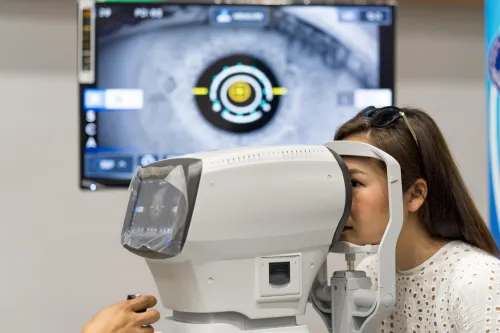
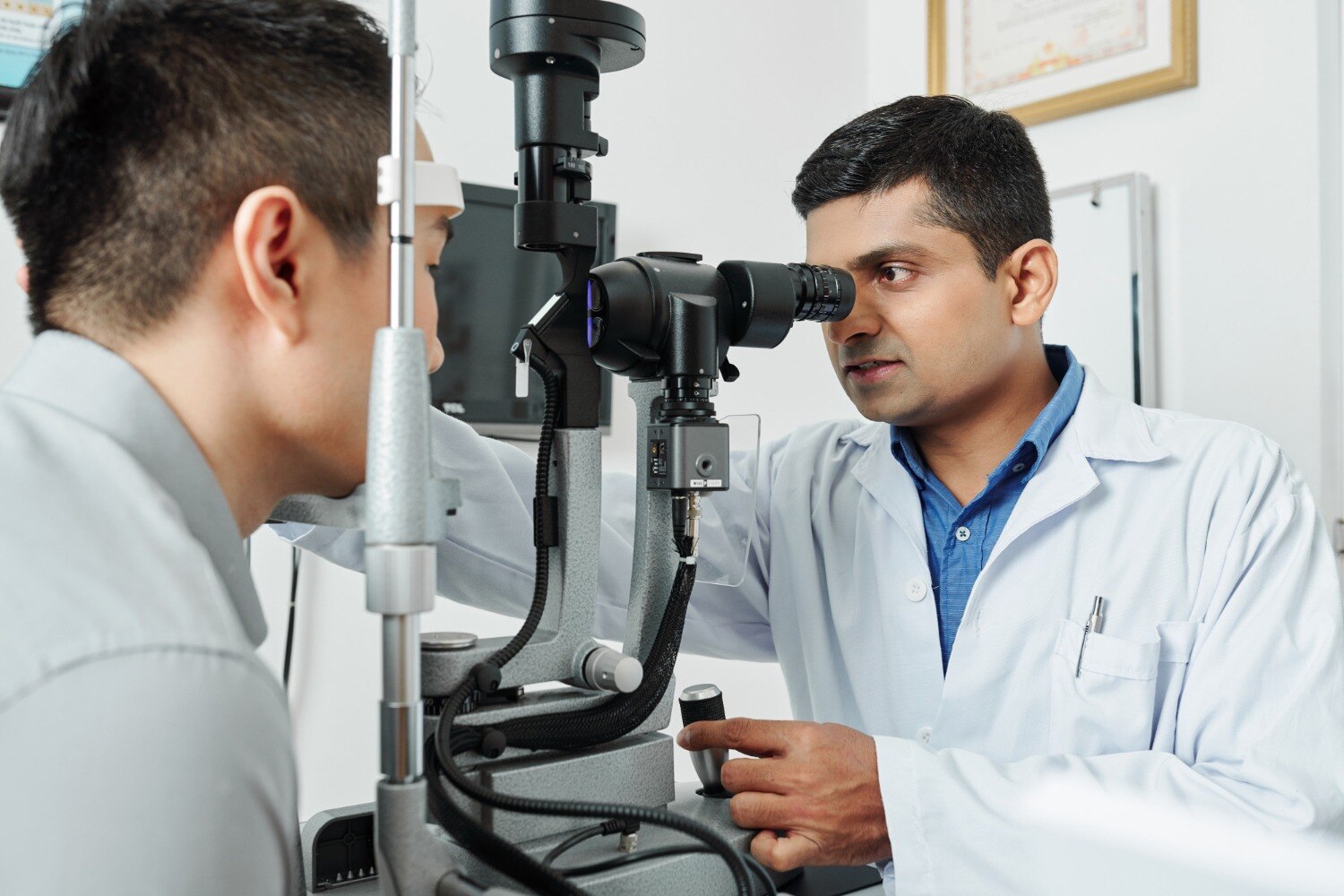
A retina specialist assessment usually starts with pupil dilation and a dilated fundus examination. The clinician may use indirect ophthalmoscopy and scleral depression to inspect the far peripheral retina; ocular ultrasound helps when blood, a cataract or another opacity blocks the view. A vision-chart result or eye-pressure reading cannot rule out a retinal tear.
| Finding | Next step | Why it matters |
|---|---|---|
| Retinal tear | Laser photocoagulation or cryotherapy | Sealing the tear can prevent fluid from reaching beneath the retina |
| Established retinal detachment | Pneumatic retinopexy, scleral buckle or vitrectomy | Retinal detachment treatment options involve a procedure and early care can affect visual recovery |
| Posterior vitreous detachment without a tear | Scheduled retinal follow-up and return precautions | A delayed tear can still develop after the first examination |
In Zirakpur, Dr. Jyoti's Hospital can be considered when arranging prompt eye evaluation and retinal diagnostic assessment, provided peripheral-retina examination is available without delay. Emergency symptoms take priority over choosing a particular facility.
Keep the follow-up appointment even after an uncomplicated posterior vitreous detachment. New flashes, a sudden increase in floaters, a curtain or worsening vision override the review date.
Related services
Eye Care / Ophthalmology Eye Checkup in Zirakpur Get a comprehensive eye checkup in Zirakpur at Dr Jyoti Hospital with experienced eye specialists. View service → |
Eye Care Cataract Treatment in Zirakpur Dr Jyoti Hospital offers advanced cataract treatment in Zirakpur with expert consultation and modern diagnostic support. View service → |
Frequently asked questions
Which flashes, floaters and vision changes require same-day care?
Seek same-day eye care for a sudden shower of floaters, repeated flashes, a dark curtain or shadow, missing peripheral vision, sudden vision loss in one eye, or a major drop in sharpness.
How can harmless floaters be distinguished from a retinal tear?
Long-standing, stable floaters without flashes or vision loss are less concerning. New or rapidly increasing floaters, flashes, or a curtain-like shadow require an urgent dilated retinal examination.
Are the flashes from your eye, migraine aura or another urgent condition?
Retinal flashes usually affect one eye and resemble brief arcs or lightning. Migraine aura often affects both eyes, develops over several minutes, and lasts up to about an hour; sudden one-sided vision loss needs urgent assessment.
What should you do immediately, and who needs faster retina review?
Do not drive if vision is impaired. Arrange same-day retina review, especially after eye injury or surgery, or if you are highly myopic, have diabetes, or have had a retinal tear or detachment.
What happens at an urgent retina assessment, and where should you go?
The clinician checks visual acuity, pupils, eye pressure, and the retina after dilating your pupils. Go to an eye emergency service or retina specialist equipped for a dilated retinal examination.
Related services
Eye Care LASIK Eye Surgery in Zirakpur Get freedom from glasses with LASIK eye surgery in Zirakpur. Dr Jyoti Hospital offers advanced vision correction treatments for clear and sharp... View service → |
Pediatrics / Child Care Child Specialist in Zirakpur Dr Jyoti Hospital provides expert pediatric care in Zirakpur, ensuring the health and well-being of infants, children, and adolescents. View service → |
Urology Urology Treatment in Zirakpur Dr Jyoti Hospital offers advanced urology treatment in Zirakpur for conditions related to the urinary tract and male reproductive system. View service → |
Dental Care Dental Treatment in Zirakpur Looking for the best dentist in Zirakpur? Dr Jyoti Hospital offers complete dental care services with advanced treatments and a patient-friendly... View service → |